
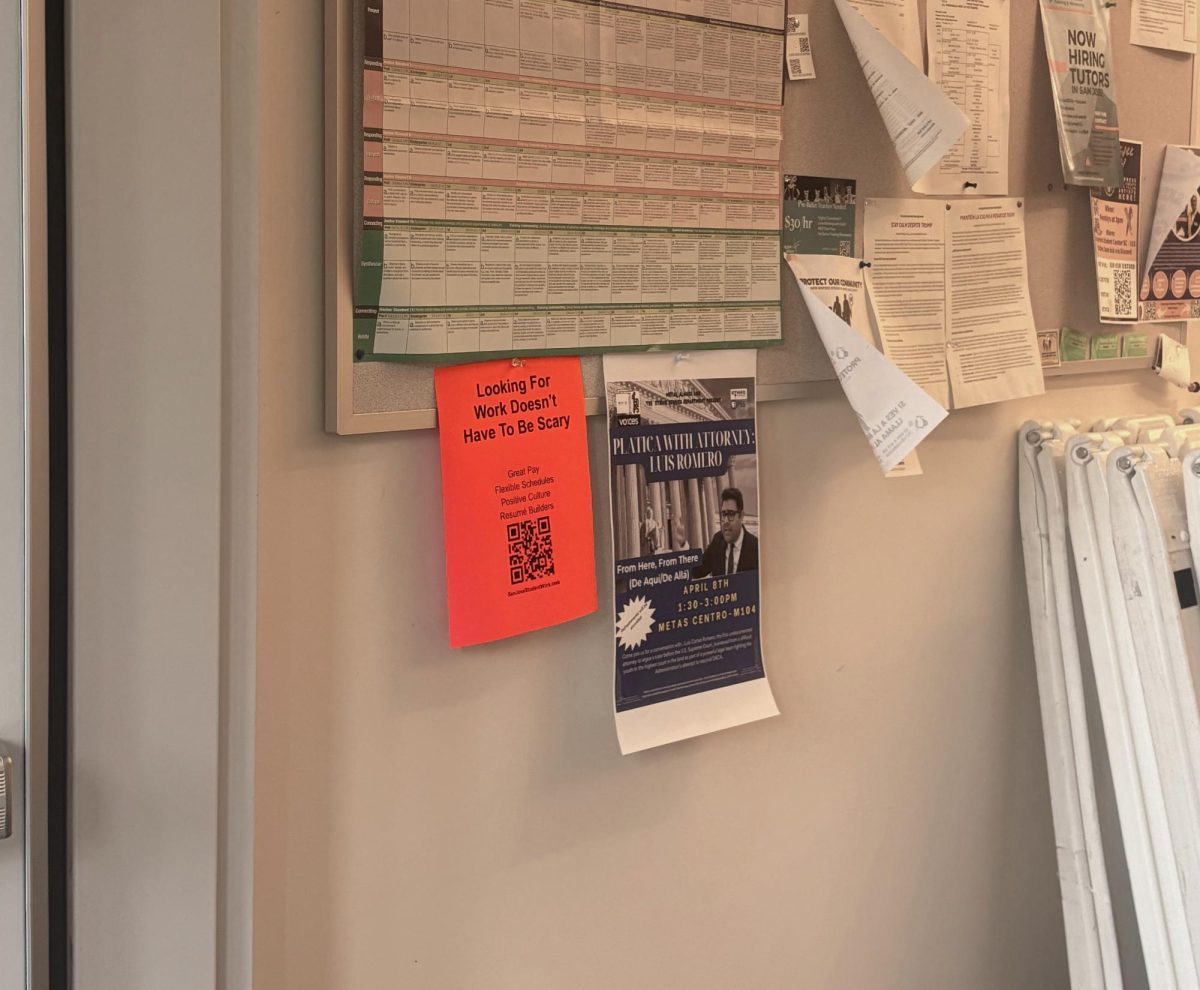
In a tough job market, college students may take a chance with shady companies. One of these companies, Vector Marketing, has been accused of being a multi-level marketing scheme and has a reputation for targeting students.
The company, which is most known for selling Cutco knives, has had recruitment flyers posted at San Jose City College throughout the last several months. These flyers are brightly-colored and left on campus bulletin boards, offering flexible schedules and a high base pay – all without any experience required.

When a student scans the QR code on one of these flyers, or types in the included link, they’re redirected to www.workforstudents.com, where they’re prompted to enter their contact information. It’s not immediately apparent that Vector operates the website, and the benefits of the job are reiterated, with no information about what it actually entails.
Company representatives keep details vague when scheduling an interview with the applicant, only promising that things will be explained during the interview process.

The interview is conducted over a video call with a group of other applicants. The applicants are shown an informational video about Vector, during which they’re told that the job involves selling Cutco knives on behalf of the company. This is done by demonstrating the knives to potential customers; to become comfortable with this, applicants are advised to demonstrate the knives to their friends and family members.
Vector does pad this out by using the allure of social events and travel for bonding between representatives. It also tells applicants that they have the opportunity to move up the corporate ladder via merit-based promotions.
However, not everything is sunshine and rainbows. Vector has faced lawsuits in multiple states for reasons such as deceptive recruiting practices and violations of labor laws.
In 2011, the company paid $13 million in settlements after a class action lawsuit accused them of failing to pay minimum wage during training. Five years later, they paid out $6.75 million in California, Florida, Illinois, Michigan and New York for the same reason.
Vector’s business model and practices leave many current and former salespeople frustrated, too. People regularly speak about their experiences with the company in online forums, such as Reddit.
“…They brought me in with promises I’d be making some pretty substantial money pretty quick,” Reddit user sholtquist99 said about the company, “and it didn’t take me long to figure out that you can only ‘earn’ that money by being a shitty, shitty person doing cold calls, selling hard, and giving out contact info for your friends and family so Vector can try to make a buck off them, too.”
Despite this, Vector denies being a multi-level marketing scheme, and insists that its recruitment practices are not deceptive. According to Amanda Sahawneh, Vector’s campus recruiting manager:
“Vector Marketing is a single-level direct sales company. Our representatives get paid to demonstrate our product and on the sale of products. It costs $0 to work with us,” Sahawneh said. “Regardless of if our representatives make a sale or not, we still offer a guaranteed base rate of pay per appointment completed. Getting friends underneath them isn’t a part of our compensation plan at all.”
Sahawneh also denied that Vector engaged in deceptive marketing toward students.
“Like many companies, we advertise in various ways to get the word out about our opportunity. This may include web advertisements, working with colleges, and recommendations,” she said.
Regardless of whether Vector is a multi-level marketing scheme, its legal track record speaks to a history of shady business practices. This behavior is well-documented, and the ease with which it can be found gives students the information they need to make an informed decision about whether to apply.
Alline Ruiz, a job development and placement specialist at SJCC, said that while job postings must be reviewed before being posted to campus bulletin boards, some flyers are added without permission.
“Since it is an actual physical job board, people can go in there and actually post things,” Ruiz said. “And we tried to do a good job of filtering through everything, going through, taking down things [with] expiration dates. If we see certain students write something on there, and they’ve already said, ‘This is racist,’ or, ‘This is scamming,’ … I take those down.”
Ruiz said that job postings need to have a stamp confirming that they’d been vetted, and she encouraged students to report suspicious job listings. This can be done by contacting [email protected].






 Español
  English